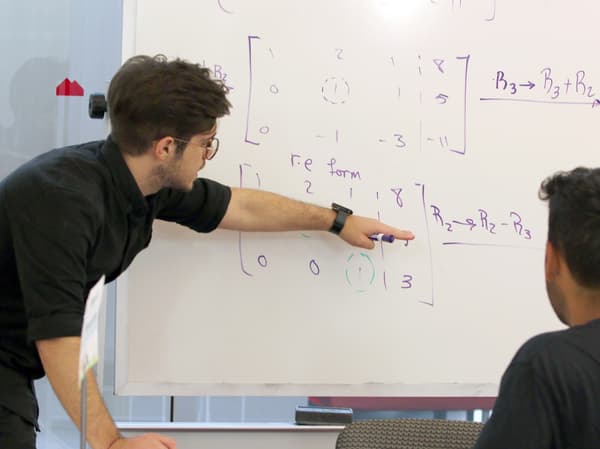
What Is Gradual Release of Responsibility?
The Gradual Release of Responsibility (GRR) model is an instructional framework that shifts the cognitive load from the teacher to the student through a four-phase process: I Do, We Do, You Do Together, You Do Individually. This approach accelerates both content mastery and language development, making it especially effective for multilingual learners who need structured opportunities to build academic language and confidence in applying it.
By systematically moving from teacher modeling to student independence, GRR ensures that students not only understand the content but also gain the language tools and confidence needed to thrive academically. Consistent use of GRR supports multilingual learners in building both language proficiency and long-term learning independence.
The "Why"
When teachers systematically transition from modeling to independent learning, scholars better understand content and develop the skills, tools, and confidence they need to thrive academically. By consistently using GRR, multilingual learners accelerate language proficiency and develop agency.
By integrating GRR into lessons, educators:
- Model engagement in learning that demonstrates clear and consistent academic language and thinking.
- Support collaboration and structured practice that result in successful engagement in and completion of independent learning.
- Reduce cognitive overload by providing structured, well-paced, intentional engagement.
- Accelerate language development through engagement in challenging content.
Examples
1. I Do (Teacher Modeling)
- Description: The teacher explicitly models the skill or concept, using clear academic language, physical cues, and think-aloud strategies.
- Purpose: Provide a concrete example of what scholars need to do and say.
- Example: While taking focused notes, the teacher says, "I notice the phrase 'Strategies for Success' is in bold and is a heading, so I will add it to my notes as a new section and record what follows below that.”
2. We Do (Guided Practice)
- Description: The teacher and scholars complete a task together, with the teacher providing prompts, support, and language coaching as needed.
- Purpose: Practice engaging collaboratively while reinforcing correct academic language and strategies.
- Example: In a Scholar Starter, when completing the summary of a quote analysis, the teacher and students co-construct a paragraph using a word bank and sentence frames. The teacher says, "Let’s start by identifying the author and what the quote says. How can we begin? And what does that mean?" The students answer, "This means that..." The teacher responds, "Great! Let’s write that together."
3. You Do Together (Collaborative Practice)
- Description: Scholars work in pairs or small groups to engage, using scaffolds like sentence frames, graphic organizers, or word banks.
- Purpose: Develop collaboration skills, shared thinking, and the use of academic language in a lower-risk setting.
- Example: Scholars work with a partner to complete a cause-and-effect graphic organizer after reading a nonfiction text, using sentence frames like "___ caused ___ because ___."
4. You Do Individually (Independent Practice)
- Description: Scholars complete the task on their own, applying what they’ve learned with reduced or no scaffolds.
- Purpose: Assess progress and promote independent engagement and academic language production.
- Example: Scholars independently write a summary paragraph of an article using academic vocabulary from a word bank and signal words previously modeled.
Tips for Implementation
- Plan Intentionally: Embed each GRR phase into lesson planning with clear objectives and scaffolds based on diagnostic teaching.
- Model Academic Language: Use think-alouds to demonstrate how to use targeted academic vocabulary and complete, complex sentence structures.
- Adjust Pacing: Go slow at first, building a strong foundational understanding of the task or content by spending more time in early GRR stages, so that scholars can go faster in the later, more independent stages of the gradual release process.
- Embed Other Scaffolds in GRR: Integrate sentence frames, word banks, rehearsal and revision, and collaboration throughout the process.
- Be Diagnostic: Monitor progress during each step of the gradual release process and adjust in real-time based on data observed during instruction.