“I Didn’t Know This Was Possible”: How Early Career Exposure Is Shaping AVID Students’ Paths
Oct 23, 2026
Author
 AVID Center
When middle school students are asked about their future, the answers are often shaped by what they’ve already seen—or haven’t. For many AVID students in Tucson, careers felt distant, abstract, or limited to a narrow set of options.
That changed when students were invited into real workplaces, real civic spaces, and real conversations with adults doing meaningful work.
Through Future Ready: Youth and Industry Partnership, AVID students didn’t just learn about careers. They began to see where they might belong.
Snapshot
- 34 AVID students participated in the pilot cohort
- 16 middle schools were represented across three districts: Amphitheater, Tucson Unified, and Sunnyside
- 100% of participants were 8th‑grade AVID Elective students, selected by their AVID Elective teachers
- One in‑person student convening per quarter, supported by ongoing reflection and follow‑up
Start With Students and Start Early
Future Ready is grounded in a simple belief: students deserve exposure to meaningful career pathways before they make high school choices that shape their futures.
After a year of collaboration between AVID, Tucson Unified School District, and United Way’s Cradle to Career initiative, which focused on the transition from graduation to workforce, the team recognized a gap. Conversations were happening about students, but not with them.
By intentionally focusing on 8th grade, the partnership created space for students to:
- Identify personal strengths
- Connect those strengths to real work
- Ask informed questions about what comes next
Learning by Doing: When Careers Become Real
One of the most powerful shifts for students came from how they engaged with industry and community partners.
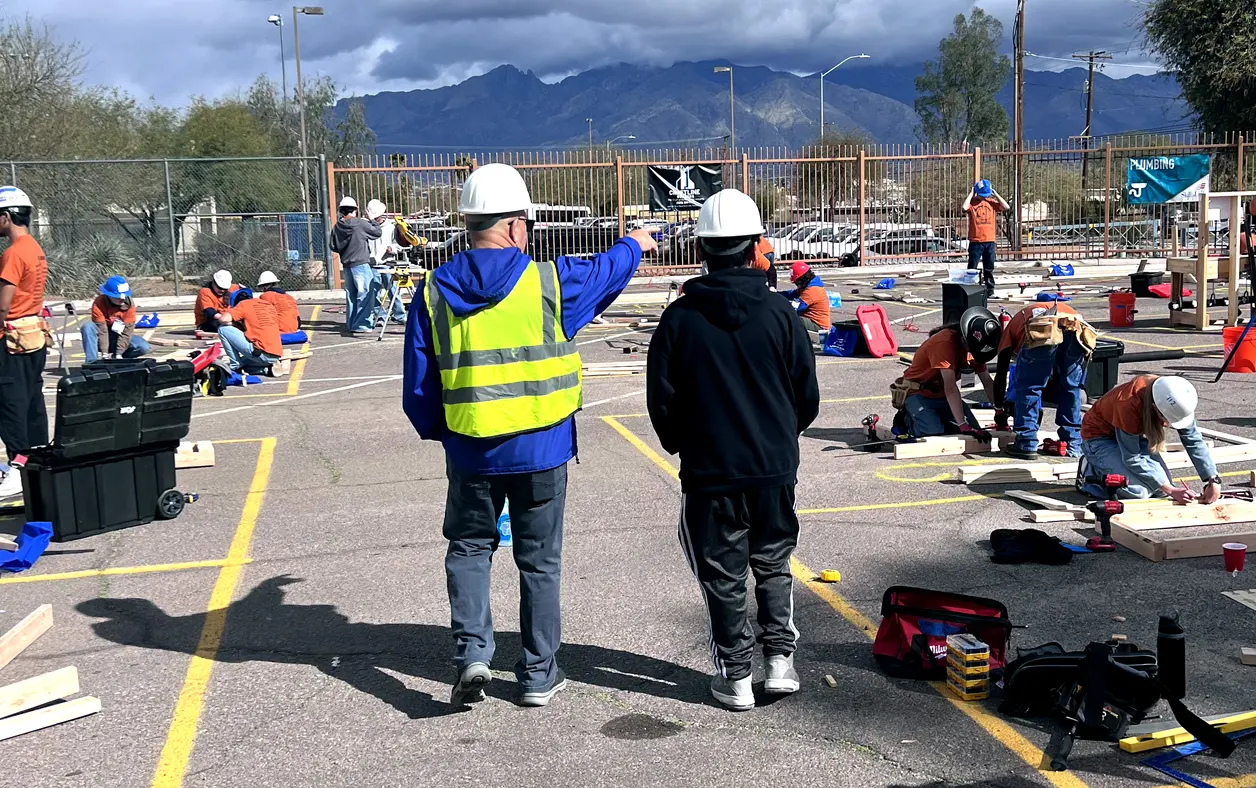
Instead of sitting through presentations, students walked beside professionals to observe daily work, ask prepared questions, and experience environments they had never entered before.
During a job‑shadowing experience with the Town of Marana, AVID District Director Julie Valenzuela watched a student’s understanding of his future expand in real time. The student had expressed interest in construction, but at the time, did not have an interest in going to college.
A building inspector explained how he worked his way up from laborer to their current position with the town. The student was surprised that he could do what he loved by attaining work experience and certifications.
For that student, a career path became concrete and attainable.
Confidence, Connection, and Leadership Beyond Career Knowledge
The impact wasn’t limited to career awareness.
Many students collaborated with peers from other schools and districts for the first time. Students practiced speaking with adults, navigating new environments, and building relationships outside their usual circles.
Educators observed notable growth in confidence and communication. Valenzuela reflected that students grew not only in curiosity, but in leadership, noting how new friendships and shared experiences helped them step forward more confidently. For many, she says, the experience “opened up a whole realm of interest and engagement.”
Seeing Service—and Themselves—Differently
For another group of students, the experience reshaped how they viewed civic life.
During a visit with the Pima County Board of Supervisors, students learned about the many departments and roles required to keep a city functioning. AVID District Director Dr. Dedee Lyngstad Brown shared that on the bus ride back to school, one student reflected on how eye‑opening the experience had been.
"I had no idea how many people help Tucson function as a city,” the student shared. “I guess I hadn't really thought about it before. I've always wanted to do something that helps other people, and now I realize how that happens. I think I want to be a part of that."
For educators, moments like this signaled a deeper outcome than just learning about jobs. Students were connecting values to viable paths forward.
The Outcomes Educators Are Seeing
While formal data collection will conclude after the Q4 session, educators report early indicators of impact, including:
- Increased student confidence in professional and peer interactions
- More thoughtful conversations about high school course selection and postsecondary options
- Strong student interest in expanding the experience to more peers
Students consistently shared that they valued the hands‑on nature of the experience and wished it occurred more frequently, suggesting that authentic exposure is fostering sustained engagement and future‑focused thinking.
What’s Next: Reflection, Sharing, and Scaling
The upcoming Q4 session will center on student reflection and feedback, focusing on how students can bring their learning back to their AVID Elective classes—especially as they prepare for high school course registration.
Organizers are also exploring how to replicate the model in Phoenix, using lessons from the pilot year to expand reach while preserving the depth that made the experience impactful.
Future Ready shows what happens when students are invited into real spaces early, where their strengths matter and their questions are taken seriously.
When students see people doing meaningful work in ways that align with their values, their futures feel less abstract and more possible.
That shift begins well before the first high school bell rings.
Put It Into Practice: What Other Districts Can Learn
Districts interested in creating similar student‑centered career experiences can consider these practices:
- Start career exposure before high school decisions are made.
- Select small pilot cohorts to prioritize depth and reflection.
- Design experiences where students observe, ask, and participate.
- Partner with organizations trusted by local industry and civic leaders.
- Build in time for student reflection and educator observation.
- Use existing leadership teams to coordinate roles and logistics.
- Gather educator‑observed evidence to guide scaling.
Related Articles

The Power of Shared Leadership
Sep 24, 2026