Engaging, Collaborative, and Virtual: One Educator’s Professional Learning Experience

Mar 06, 2026
Author
 AVID Center
With Perspectives From Tamieka Thomas, AVID Elective Teacher and AVID Site Coordinator, Alief Middle School (TX)
After years of attending AVID Summer Institute™, AVID Site Team learning, and district‑level planning sessions, Tamieka Thomas had a lot of experience with meaningful professional development. She knew the energy of being in a room with educators, the buzz of collaboration, and the rhythm of in‑person learning.
She was pleasantly surprised, then, when a virtual session created that same spark.
Unexpectedly Engaging
Despite her comfort with AVID’s traditional in‑person sessions, Tamieka found herself surprised by how dynamic the virtual environment became. As she put it, “What surprised me most was how engaging and collaborative the virtual sessions were.”
Breakout rooms became spaces where participants modeled strategies, swapped digital tools, and worked through ideas in real time. And, the structure supported deep reflection on both instruction and systems.
According to Tamieka, “The level of interaction through breakout rooms, shared digital resources, and real-time strategy modeling mirrored the best elements of in-person learning.”
One standout moment came during a breakout focused on strengthening WICOR strategies. Educators from different regions shared real examples of how they were using focused note-taking and tutorial structures to increase student ownership in their classrooms.
“It was both affirming and motivating,” Tamieka recalls, “It strengthened my commitment to building a college- and career-ready culture on my campus.”
Turning Learning to Action
One strategy Tamieka adopted right away was to refine her approach to the AVID Focused Note‑Taking Process and ensure it connected more intentionally to tutorials and academic discourse.
She strengthened that approach in three key ways:
- Utilizing structured Cornell notes across content areas
- Facilitating tutorials that required higher-level questions rooted in student notes
- Incorporating moments of reflection into lessons to build students’ metacognition
The transformation in her students was noticeable—they became more accountable and prepared for tutorials, used improved academic vocabulary, displayed higher levels of inquiry during group discussions, and showed better organization and processing of content.
It was exactly the kind of immediate, practical change Tamieka hoped professional learning would support, and the virtual format made it easier to implement right away. With her support, Tamieka’s campus is on its way toward its goal of 85% of AVID students effectively implementing WICOR strategies, and they have already seen growth in student engagement, collaboration, and academic confidence.
Strengthening AVID Schoolwide
In addition to shaping Tamieka’s day-to-day instruction, the virtual experience helped drive alignment across campus. In her words, “AVID virtual professional learning provided practical, immediately applicable strategies while also reinforcing the importance of systems-level implementation.”
Without travel time or logistical disruption, she could move seamlessly between learning, coordinating with her Site Team, and aligning next steps to the AVID College and Career Readiness Framework. This clarity helped reinforce that AVID practices extend beyond the AVID Elective classroom and are implemented across the campus to support a schoolwide college and career readiness culture.
A Takeaway for Fellow Educators
For educators wondering how virtual professional learning compares with in‑person experiences, Tamieka’s reflections offer a helpful perspective informed by both. Her experience suggests that meaningful engagement isn’t tied to the format itself; it comes from thoughtful structure, opportunities to collaborate, and clear connections to classroom and campus needs. For Tamieka, those elements came together in a virtual environment just as effectively as they have in face-to-face sessions.
About Alief Middle School, Texas
AVID Partner Since: 2010
Student Population: 803 students
Grades: 6–8
Student Demographics:
- 71% Hispanic/Latino
- 14.7% Asian
- 11.5% Black/African American
- 1.7% White
- 88% Economically Disadvantaged
- 73.6% Bilingual/ESL
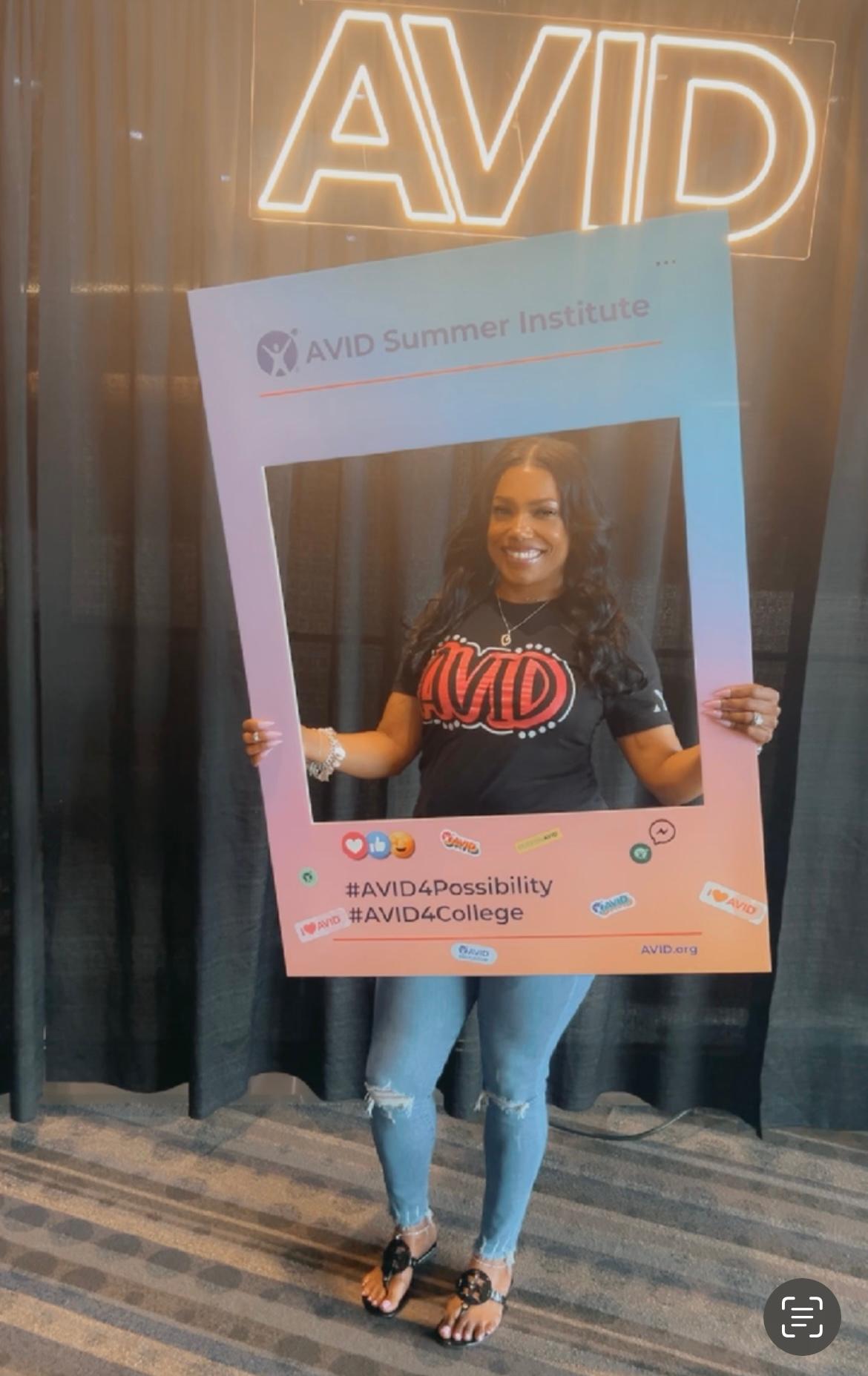
Tamieka Thomas at AVID Summer Institute.
Related Articles

The Power of Shared Leadership
Sep 24, 2026