Recognizing Instruction That Moves Learning Forward
May 13, 2026
Author
 AVID Center
With perspective from Christina Barhorst, Program Coordinator, RIMS AVID, San Bernardino County, CA
At Murrieta Mesa High School (CA), instructional walkthroughs showed that WICOR® strategies were visible across classrooms. Students were collaborating, AVID language was present, and engagement was high. At the same time, campus leaders wanted to be certain those strategies were doing more than creating activity. They wanted to see the strategies advancing rigorous learning and academic thinking—a focus that shaped the school’s approach to professional learning, walkthroughs, and recognition.
Snapshot
- Consistent instructional monitoring: Administrators, including the principal, conduct weekly walkthroughs across assigned classrooms.
- Fall 2025 evidence: Over 1,900 instances of rigorous WICOR‑aligned instruction recognized across 94 teachers.
- Cross-disciplinary impact: Increased use of Socratic Seminars in Science and AP courses.
- Academic momentum: Higher CAASP scores alongside growing AP and Dual Enrollment participation.
- Student access: A high percentage of AVID students complete at least one AP course by graduation.
Recognition as an Instructional Signal
Murrieta Mesa leaders grounded their approach in a clear belief: WICOR is the vehicle; rigor is the destination.
They recognized that when WICOR is simplified to the presence of strategies, it risks becoming false rigor. Writing, Inquiry, Collaboration, Organization, and Reading only matter if they are used to push students toward complex thinking and academic independence.
Recognition became a way to signal instructional priorities, reinforce shared expectations, and protect the intent of AVID implementation. Rather than rewarding strategy use in isolation, school leaders used a simple recognition structure to identify when WICOR practices were clearly supporting rigorous student learning. In doing so, they gained a practical way to track the use of AVID strategies over time while also acknowledging the consistency, intention, and instructional impact of teachers’ work.
Building a Shared Instructional Framework
This work began during the rollout of Common Core, when the AVID team introduced WICOR as a framework for connecting daily instruction to the anchor standards. In staff meetings, leaders emphasized instructional shifts rather than new initiatives, positioning WICOR as a way to organize and strengthen effective practices already happening in classrooms.
That framing mattered. By presenting WICOR as a shared instructional lens rather than an additional expectation, teachers were able to focus on how strategies elevate rigor. To support that shift, the school invested in ongoing structures, including site‑based professional development and AVID content trainings, WICOR strategy posters to build a common language across classrooms, and regular opportunities for departments to share best practices during staff meetings. Over time, WICOR became the way educators talked about instruction across grade levels and content areas.
That shared understanding shaped how observations were conducted. Walkthroughs were intentionally framed around WICOR, with pre‑observation conversations and lesson plans reflecting purposeful integration of strategies. Administrators looked beyond surface‑level activity to identify evidence of rigorous academic tasks, high levels of student thinking and discourse, and intentional use of strategies aligned to posted WICOR expectations.
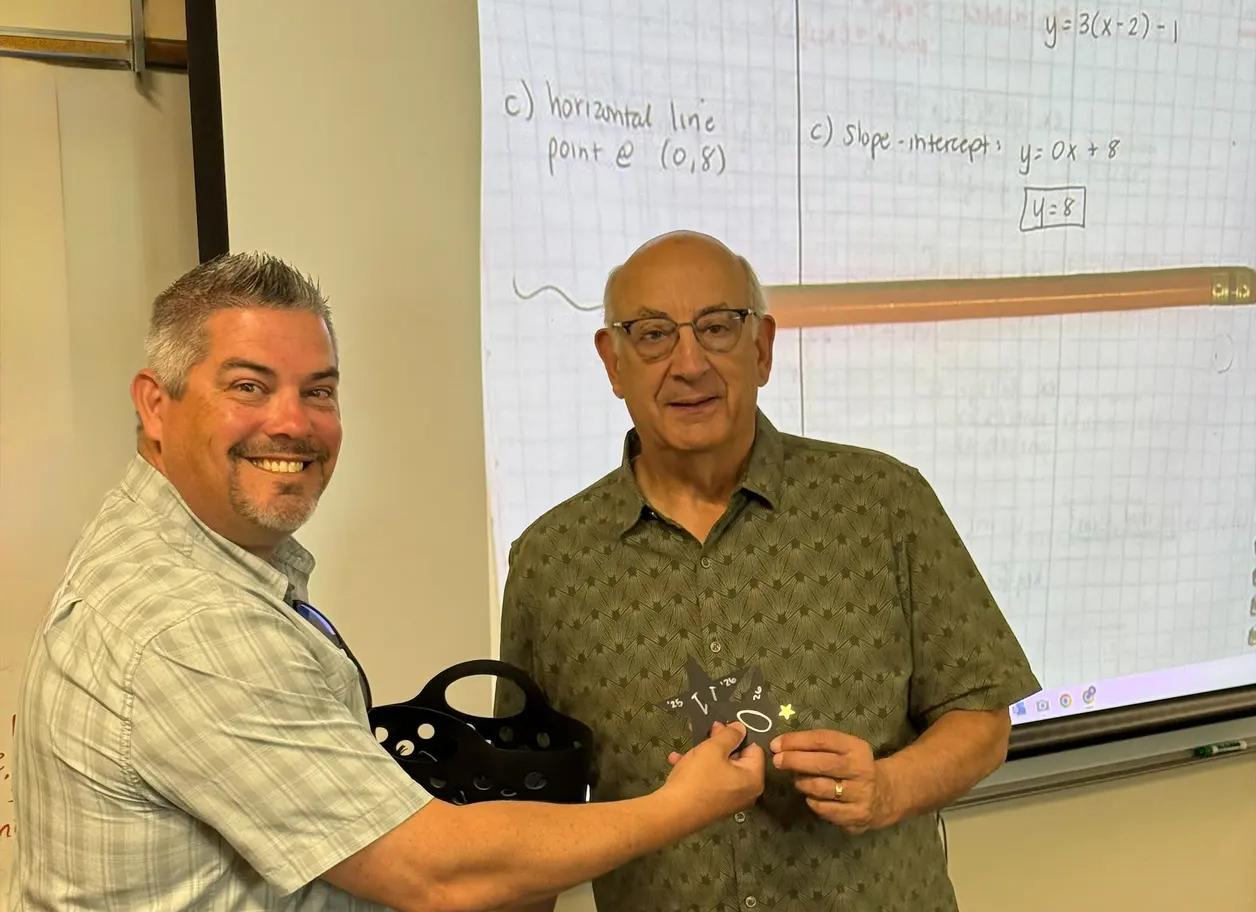
Within this context, WICOR Stars functioned as instructional feedback rather than simple praise. During walkthroughs, administrators awarded stars to recognize effective practice aligned to the WICOR focus, signaling moments when strategies were clearly supporting student learning. Those stars were also logged, allowing administrators to track patterns of implementation over time and identify where depth was taking hold across classrooms.
This consistent emphasis on depth over compliance helped administrators and teachers distinguish between visible activity and meaningful learning.
Student Voice Becomes Instructional Evidence
Student nominations for WICOR Stars became a critical feedback loop—not because they named favorite teachers, but because they described how strategies impacted learning.
Collaboration surfaced most frequently. Students described structured collaboration that helped them unpack complex texts, wrestle with Essential Questions, and refine thinking through peer discourse. Critical reading practices, especially marking the text, were consistently cited across subjects, reinforcing that rigor was not confined to one department.
In Science and AP classrooms, Socratic Seminars were embedded over time. Students practiced repeatedly—analyzing texts, responding to peers, and defending claims—until the strategy became a legitimate measure of learning.
That consistency allowed teachers to use Socratic Seminar as part of a final exam, signaling that WICOR strategies were supporting summative assessment and rigorous performance.
Familiar routines across classes reduced cognitive load, allowing students to focus on content complexity rather than procedures. For administrators, these patterns offered another lens for identifying classrooms where WICOR was meaningfully aligned to academic expectations.
Expanding Access Through Consistent Expectations
Because high‑engagement WICOR strategies were used across classrooms, all students developed familiarity with practices that prepared them for advanced coursework, including focused notes, Essential Questions, Socratic Seminars, critical reading, and structured collaboration.
That consistency has translated into increased willingness to enroll in AP and Dual Enrollment courses, as well as continued expansion of the school’s Dual Enrollment offerings.
At Murrieta Mesa High School, recognition works because it is in service of instruction, not the other way around. By keeping rigor as the non‑negotiable and using recognition to reinforce shared expectations, the campus preserved the intent of AVID and created a culture where WICOR signals deep learning.
Put It Into Practice: Using Recognition to Protect Rigor
- Clarify the instructional intent first. Recognition should reinforce learning goals.
- Position WICOR as a framework, not an add‑on. Help teachers see what they already do well.
- Define administrator look‑fors. Focus on cognitive demand and student thinking.
- Use student voice as evidence. Treat nominations as insight into instructional impact.
- Build from practice to performance. Ensure that strategies support summative assessment.
- Track recognition data over time. Use it to identify patterns, growth, and support needs.
Murrieta Mesa High School at a Glance
- AVID Partner Since: 2009
- National Demonstration School since 2016
- AVID Site of Distinction, Advocacy Award, Showcase Site
Enrollment: 2,026 - 46.7% Hispanic or Latino
- 29% White
- 8.7% Two or More Races
- 5.9% African American
- 3.9% Asian
- 3.1% Filipino
- 0.1% American Indian or Alaska Native
- 2.1% Not Reported
- English Language Learners: 3.8%
Related Articles

The Power of Shared Leadership
Sep 24, 2026