Don't Add More. Align the Work.
Nov 20, 2026
Author
 AVID Center
Mike McCormick has seen countless initiatives come and go over the course of his career in public education. Some delivered meaningful results. Others created more complexity than clarity.
As a teacher, principal, district administrator, and eventually superintendent, he learned that lasting improvement rarely comes from asking educators to do more. It comes from helping them focus on the right things and ensuring every effort works toward a shared purpose.
Today, that lesson sits at the center of his work as AVID Center’s inaugural Superintendent in Residence.
“I often tell people that I have one of the best jobs in education,” Mike says. “I get to work with superintendents and educational leaders across the country, helping them tackle some of their biggest challenges while keeping students at the center of every decision.”
From One District to a National Impact
Before joining AVID, Mike spent 34 years in public education, including nine years leading California’s Val Verde Unified School District.
His career took him through nearly every level of the education system, giving him firsthand experience with both the opportunities students can access and the barriers that can stand in their way.
When he retired from the superintendency, he wasn’t ready to step away from the work. Instead, he began thinking about how he could help more leaders navigate the same challenges he had faced throughout his career.
AVID provided that opportunity.
The organization’s mission reflected a belief that had guided Mike for decades: Talent exists everywhere, but opportunity does not always exist in equal measure. According to Mike, “A student’s ZIP code should never determine their opportunities or their future.”
At the heart of that belief is a broader view of education itself. For Mike, success extends beyond helping students reach the next milestone to also preparing them for opportunities they may not even know exist yet.
That’s why AVID’s emphasis on critical thinking, collaboration, inquiry, organization, and student agency resonates so strongly with him. These are the skills students will need to navigate a continually evolving future and create possibilities of their own.
Helping Leaders Connect the Dots
A challenge facing many leaders today is an overabundance of priorities.
Districts are working to improve literacy outcomes, strengthen college and career readiness, implement MTSS frameworks, integrate technology, support student well-being, and respond to changing community needs, often all at the same time.
Without alignment, even important initiatives can begin competing for educators’ time and focus.
Mike helps leaders step back and see the bigger picture. His work focuses on helping superintendents connect their vision, priorities, and existing initiatives into a coherent strategy that supports students and teachers alike. As he often reminds leaders, “When everything is a priority, nothing is a priority.”
For Mike, AVID is most powerful when leaders see it not as one more initiative but as a framework that strengthens and aligns the work already underway.
Looking for Clarity in a Complex Future
The same focus on alignment shapes Mike’s interest in emerging technologies, particularly artificial intelligence.
While many conversations about AI focus on efficiency or innovation, Mike sees another opportunity. He believes that AI can help leaders identify connections between competing priorities, reduce unnecessary complexity, and create greater coherence across their systems.
At a time when educators are experiencing initiative fatigue, that clarity matters. Mike emphasizes, “Our responsibility as leaders is to create the conditions where educators can focus their energy on what matters most: great teaching and meaningful student learning.”
Creating Space for Leadership Conversations
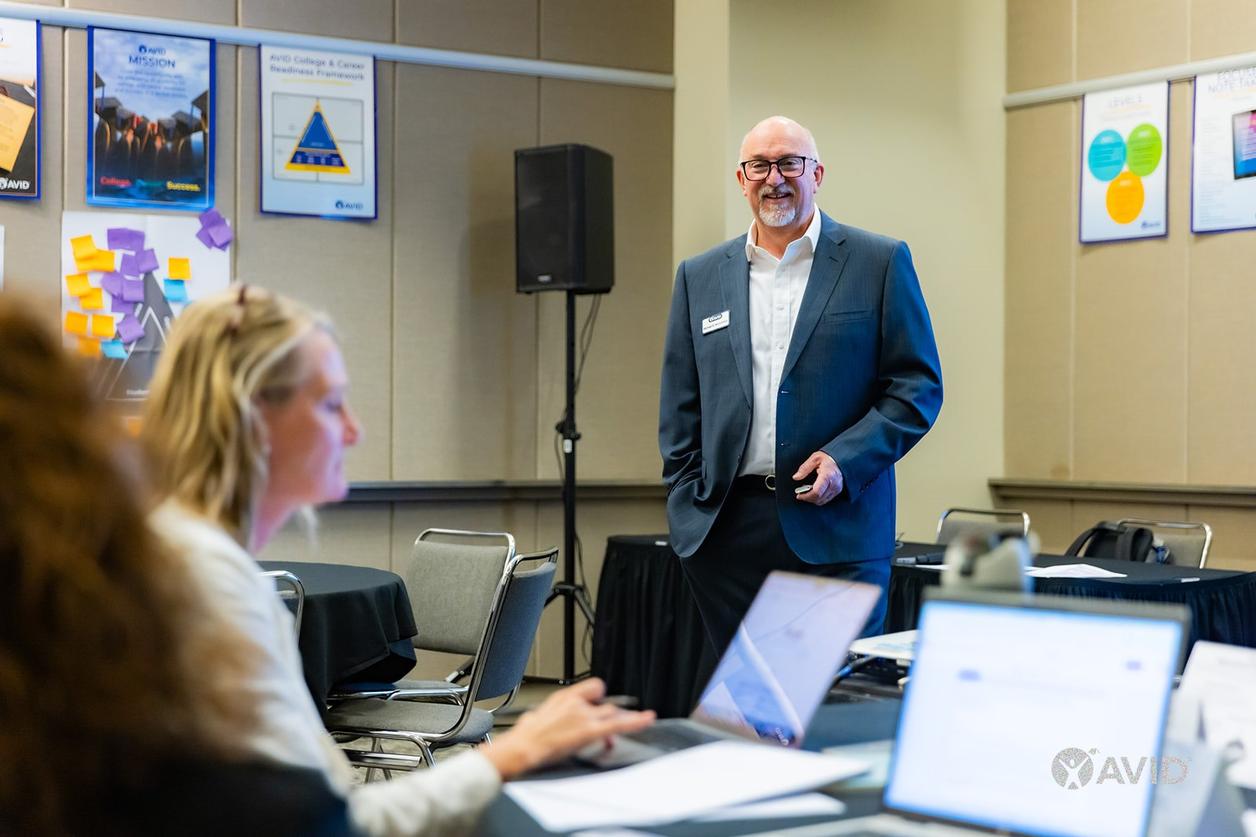
One of the initiatives Mike is most proud of is AVID’s superintendent collaboratives. These gatherings bring district leaders together to discuss challenges, exchange ideas, and learn from one another in ways that are often difficult amid the demands of the job.
After years in the superintendent’s chair himself, Mike understands how isolating leadership can be.
“I love those moments when a leader has an ‘a-ha’ moment, when a complicated challenge suddenly becomes clearer, or they begin to see a new possibility for their students or staff.”
Beyond the power of networking, Mike believes that the collaboratives are opportunities for leaders to gain perspective, strengthen relationships, and build momentum around solutions that ultimately impact thousands of students.
Motivating Change That Lasts
Mike’s leadership is guided by a steadfast principle: “Motivate, don’t mandate.” It’s a lesson learned over decades of leading change.
People rarely commit to improvement because they are told to. That commitment comes when they understand the purpose, believe in the vision, and see themselves in the work. Creating that sense of shared ownership is what transforms good ideas into lasting impact.
A Reminder for Leaders
As schools continue navigating competing priorities and growing demands, Mike offers timely advice: “Don’t add more to the work. Align the work.”
Meaningful change happens when leaders create clarity rather than complexity, helping educators focus their time, energy, and expertise on what matters most for students.
That focus has guided Mike’s career from the classroom to the superintendent’s office and now to districts across the country.
Because when people align around a shared vision, systems become stronger, educators become more effective, and students gain greater access to the opportunities they deserve.