When AVID Becomes the Way a District Learns
Aug 19, 2026
Author
 AVID Center
In Park Hill School District, AVID is the way learning happens. For everyone.
Nearly two decades after first launching AVID in two high schools, the Missouri district has built a K–12 system where AVID strategies shape instruction, professional learning, and even how educators speak about teaching itself. The results were measurable student outcomes, stronger instructional alignment, and a culture where continuous learning is expected at every level.
From Two Schools to a Districtwide Commitment
Park Hill’s journey began in 2007 with the AVID Elective at two high schools. What followed wasn’t rapid expansion, but intentional growth.
Years later, district leaders began connecting AVID to broader instructional priorities—particularly work around cultural responsiveness and unconscious bias. That shift moved AVID beyond a classroom strategy to something more foundational, a shared approach to teaching and learning.
From there:
- AVID expanded schoolwide implementation into all four middle schools
- Elementary schools phased in implementation
- Full K–12 alignment was achieved within the last few years
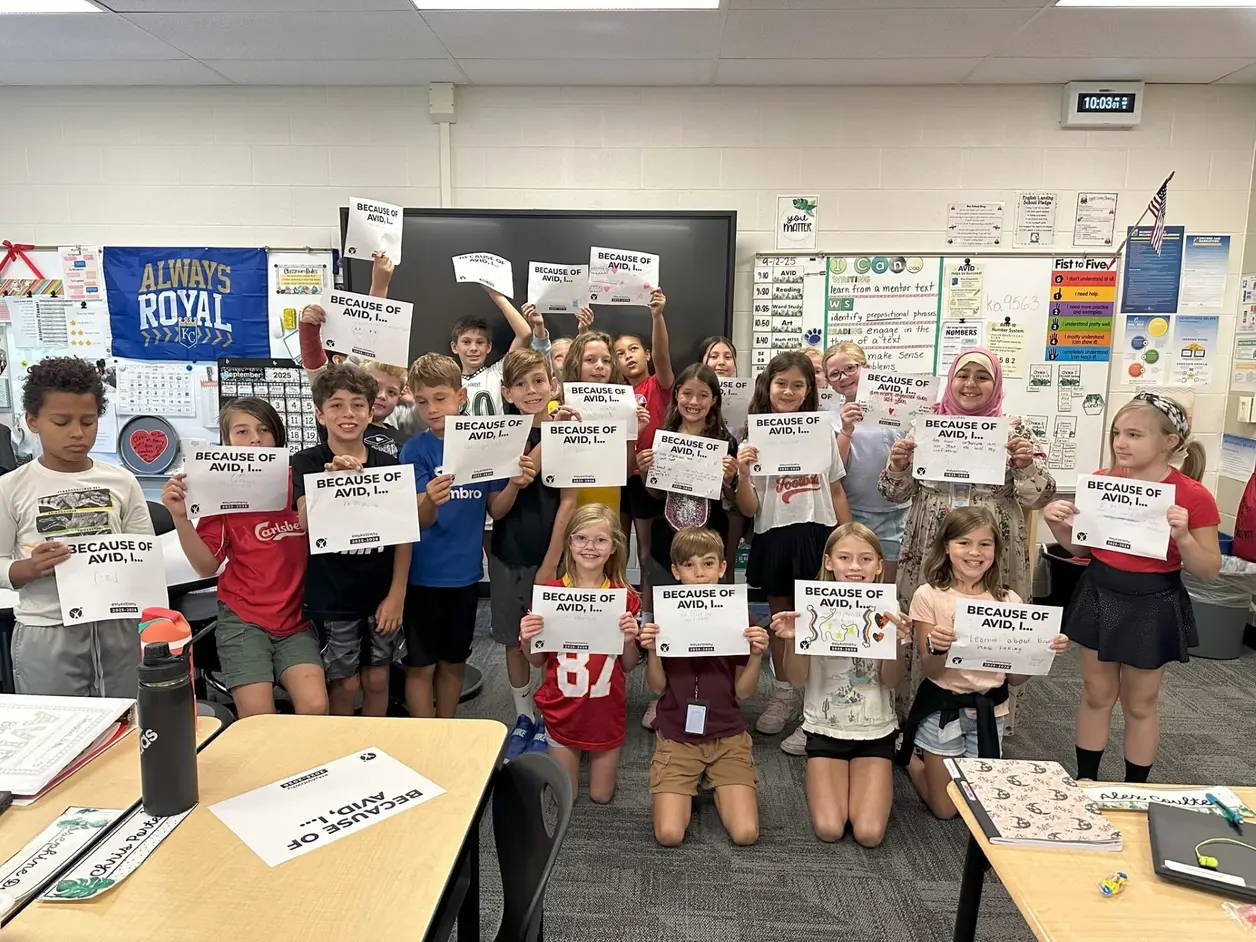
Today, AVID is embedded across every grade level; not as an add-on, but as a core part of how the district operates.
Professional Learning That Never Stops
One of the most defining elements of Park Hill’s approach is how deeply it invests in ongoing, intentional professional learning.
AVID isn’t optional, and it isn’t isolated.
- Every school includes AVID implementation in its School Improvement Plan
- AVID is one of the district’s core professional learning pillars
- Dedicated funding ensures consistent access to training
Each year:
- Educators from every school attend AVID Summer Institute, ensuring systemwide alignment and fresh learning
- On-site professional learning reaches approximately 60 educators (split between elementary and secondary)
- Instructional coaches and teachers are trained to deliver AVID professional learning internally
This last step is key. Park Hill made a deliberate decision to build internal capacity, setting a goal to have trained AVID facilitators in every building. The result is year-round learning—by educators, for educators.
Schools even host internal “AVID learning fairs,” where staff lead sessions for colleagues, creating a culture that values both expertise and shared growth.
Modeling From the Top Down
At Park Hill, professional learning doesn’t stop at the classroom door; it flows through every level of the system.
District leaders model AVID strategies during trainings. Principals then bring those strategies back to their schools and model them with staff. Teachers, in turn, bring the same approaches into their classrooms.
This cascading model builds consistency, but more importantly, credibility.
Educators experience AVID strategies as learners first. Then they apply them with confidence.
A Shift in Instruction and in Conversation
As AVID took hold, something else changed: the way educators talk about teaching.
Instructional conversations became deeper and more focused. The emphasis shifted toward the educator’s role in creating rigorous, engaging learning environments. And a district-developed learning model, naturally aligned with AVID principles, helped unify that shift without needing to explicitly label every strategy.
AVID became the foundation beneath the work.
Accountability That Reflects Priority
Park Hill treats AVID implementation as essential, not optional.
Clear accountability is linked to student outcomes and instructional expectations. AVID practices are visible, monitored, and supported across buildings.
Families are part of the process, too. The district shares student work and expectations with families so they can better understand and support student learning.
Results That Tell the Story
The impact of this sustained effort is visible in student outcomes.
- The entire Park Hill High School Class of 2026 was accepted to a four-year college or university
- 2026 Graduates earned a combined $2,339,500 in scholarships
- Students report feeling more prepared for their futures
These outcomes didn’t happen overnight. They are the result of years of deliberate, aligned effort.
What Other Districts Can Learn
Park Hill’s success offers a clear roadmap for districts looking to expand AVID systemwide:
- Start small—but plan for scale
A pilot can spark momentum, but long-term success requires a vision for alignment across grade levels. - Invest in professional learning—and protect it
Dedicated funding and consistent access to training ensure that implementation doesn’t fade over time. - Build internal capacity
Training educators to lead professional learning creates sustainability and ownership. - Model at every level
When leaders model instructional strategies, adoption becomes more authentic and consistent. - Align, don’t layer
Integrating AVID into existing frameworks makes it part of the system, not one more initiative competing for attention. - Stay the course
Meaningful change takes time. Park Hill’s journey reflects years of intentional effort, not a quick rollout.
Park Hill School District at a Glance
Implementation started in 2007
- Implementation now spans K–12
Lakeview Middle School is a National Demonstration School
- English Landing Elementary School is a Showcase School
- Both Lakeview and English Landing were named in the top 45 AVID Exemplary Schools in the Nation for the 45th Anniversary
- Includes several municipalities with 60% living in Kansas City and 18.9% within unincorporated areas of Platte County, MO
Total enrollment: Approximately 11,900
- 3% Asian
- 14.4% Black
- 12.2% Hispanic
- 0.4% Indian
- 6.5% Multiracial
- 1.7% Pacific Islander
- 61.8% White
- 38.2% Non-White
- 27.4% Free and Reduced Lunch
- 7.4% ELL LEP
- 10.3% IEP
Related Articles


The Power of Shared Leadership
Sep 24, 2026