Why It Matters
Simply using technology doesn’t make learning more engaging or effective. The 4 A's ensure that technology serves learning. Each “A” represents a stage of intentional instructional design that deepens conceptual understanding, collaboration, and agency for both students and educators.
The 4 A's help educators:
- Maintain focus on learning first, tools second.
- Move from teacher-centered to student-driven learning.
- Foster digital citizenship and creativity through authentic, real-world tasks.
- Align instructional decisions with the AVID College and Career Readiness Framework, ensuring that every student gains the skills to succeed in college, career, and life.
Prepare Students to Thrive With the 4 A's
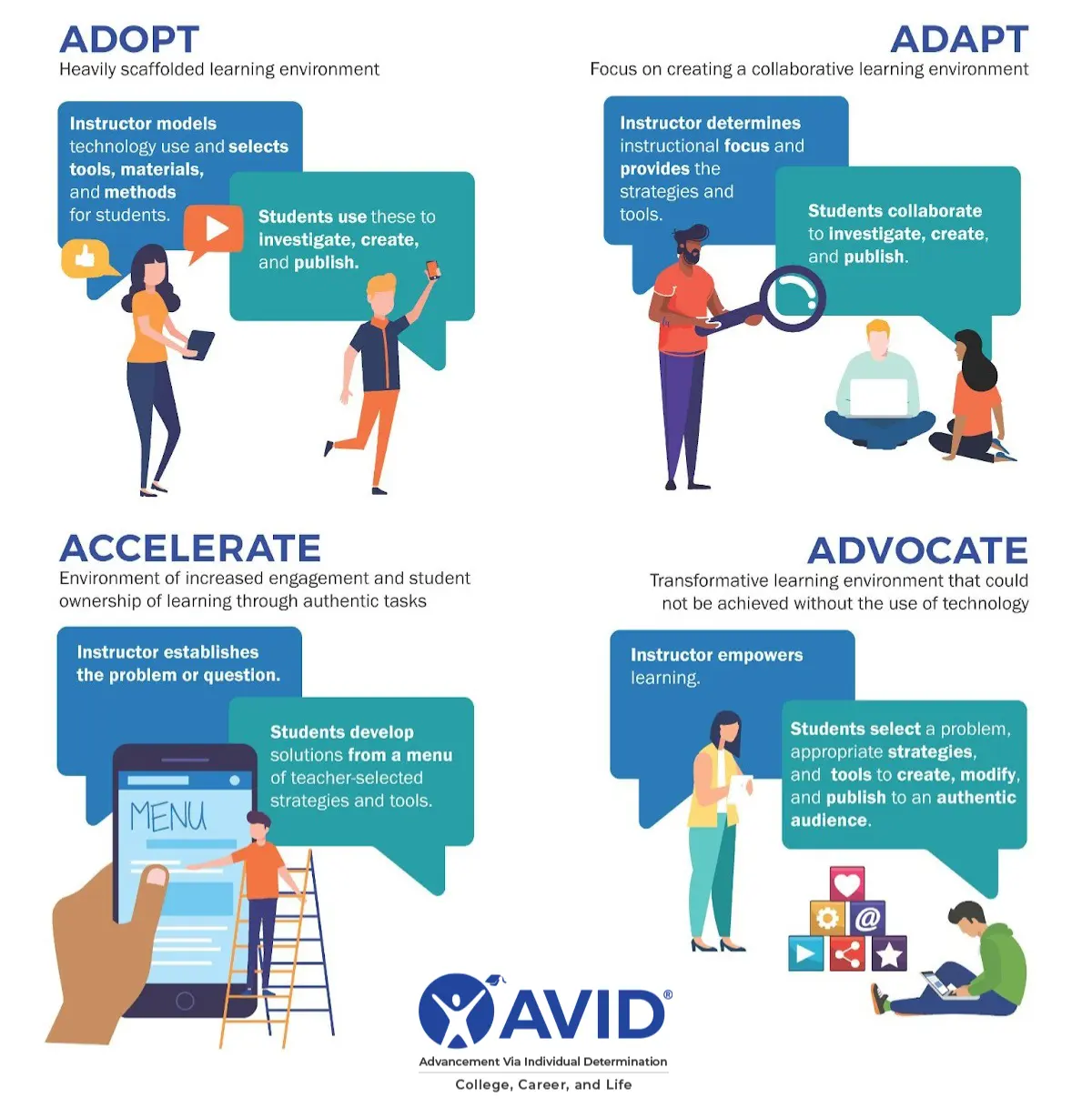
The 4 A's turn digital teaching and learning into purposeful, student-owned experiences. Download the guide to see clear roles, examples, and evidence that you can immediately put to use.
Adopt
Learning begins with modeling and scaffolding.
Educators begin to adopt digital tools to enhance instruction, modeling how technology can support learning goals. Students use selected tools to explore, create, and publish their work in guided ways.
Classroom focus: Teacher-led modeling and access to foundational digital tools.
Classroom focus: Teacher-led modeling and access to foundational digital tools.
Adapt
Collaboration becomes central.
As teachers adapt, they modify lessons to be more student-centered. Educators determine the focus and tools, while students collaborate to solve problems and create authentic work.
Classroom focus: Shared responsibility and guided collaboration.
Classroom focus: Shared responsibility and guided collaboration.
Accelerate
Students take ownership of learning.
In the accelerate stage, students choose strategies and tools from a set of options to demonstrate understanding and apply knowledge. Educators shift to facilitation, supporting students in authentic, inquiry-driven tasks.
Classroom focus: Student agency, deeper engagement, authentic tasks.
Classroom focus: Student agency, deeper engagement, authentic tasks.
Advocate
Technology transforms what’s possible.
Educators and students advocate for transformative learning experiences that could not be achieved without technology. Students design projects, select tools, and publish to real or global audiences, while teachers coach and support.
Classroom focus: Empowered learners and global collaboration.
Classroom focus: Empowered learners and global collaboration.