
Why AI Matters in Education
Preparing students to engage with AI thoughtfully, responsibly, and with purpose.
Artificial intelligence is increasingly present in education, the workplace, and everyday life, shaping how information is accessed, how knowledge is constructed, and how problems are solved. As students encounter AI as a routine part of the environments they are preparing to enter, it is essential that they are well equipped to engage with these tools thoughtfully and responsibly.
AVID’s engagement in this work is grounded in the belief that learning comes first and technology serves that learning. Our focus is not exposure to AI but rather preparation for it, by helping students develop critical thinking, ethical awareness, and agency so that students can navigate an AI‑influenced world with purpose, integrity, and confidence.

AVID’s Vision for AI in Education
AVID envisions the ethical and transparent use of artificial intelligence to activate student agency and amplify educator effectiveness. When integrated with rigor and purpose, AI can support meaningful learning experiences that deepen thinking rather than replacing it. Guided by a learning‑first, technology‑second approach, AVID’s vision for AI prepares students with the skills, dispositions, and critical awareness needed to thrive in college, career, and life.

Core Principles for AI in Education
AVID’s approach to artificial intelligence is grounded in learning, access, and rigor. These core principles guide how AI is integrated to deepen thinking, expand opportunity, and prepare students for the future, without compromising academic integrity or student agency.

Rigorous and Purposeful Integration
AI should strengthen, not replace, learning. When used intentionally, AI acts as a scaffold that supports thinking, problem‑solving, and inquiry while preserving productive struggle. Like a GPS, AI can guide and recalibrate, but the learner remains in control of the journey. Purposeful integration ensures that AI deepens cognitive growth.

Cultivating Innovation and Opportunity
AI can expand instructional possibilities when used intentionally. As it becomes part of everyday life, all students need access and support to build AI fluency and engage confidently in an AI‑driven world.

Preparing Students for the Future
Preparing students for college, career, and life requires developing AI literacy alongside durable skills and ethical dispositions. Students must understand how AI systems work, recognize their benefits and risks, critically evaluate outputs, and consider broader societal impacts. Responsible AI integration empowers students to make informed decisions and contribute thoughtfully to their future.

Why AVID Is Engaging in This Work
A responsible, learning‑centered approach to integrating AI in education
As artificial intelligence becomes more integrated into educational and professional spaces, AVID is committed to ensuring that its use aligns with our values, instructional priorities, and responsibility to students and educators. AI tools must be used ethically and transparently, with careful attention to data privacy, security, and intellectual property. Educators and students should always understand when AI is being used, how it works, and what its limitations are. This transparency supports academic integrity and empowers informed, responsible decision‑making.
At the same time, AVID’s engagement in AI work is driven by the belief that AI should support learning, not replace it. When used intentionally, AI can amplify educator effectiveness by supporting diagnostic teaching, enabling differentiated instruction, and freeing up time for meaningful relationships and individualized support. Students must learn to recognize the difference between AI supporting their thinking and AI doing the thinking for them. By developing awareness of cognitive off-loading and engaging in reflection, learners are encouraged to engage in productive struggle to strengthen their agency and persistence.
AI Integration Framework: The 4 A’s of AVID Digital Learning
AVID Digital Learning: The 4 A’s®—Adopt, Adapt, Accelerate, Advocate®—provides a structured approach for meaningfully integrating digital tools such as AI into teaching and learning. The 4 A’s support a gradual shift from teacher‑directed use to student‑driven application, ensuring that AI is used purposefully to deepen learning and preserve rigorous academic engagement.
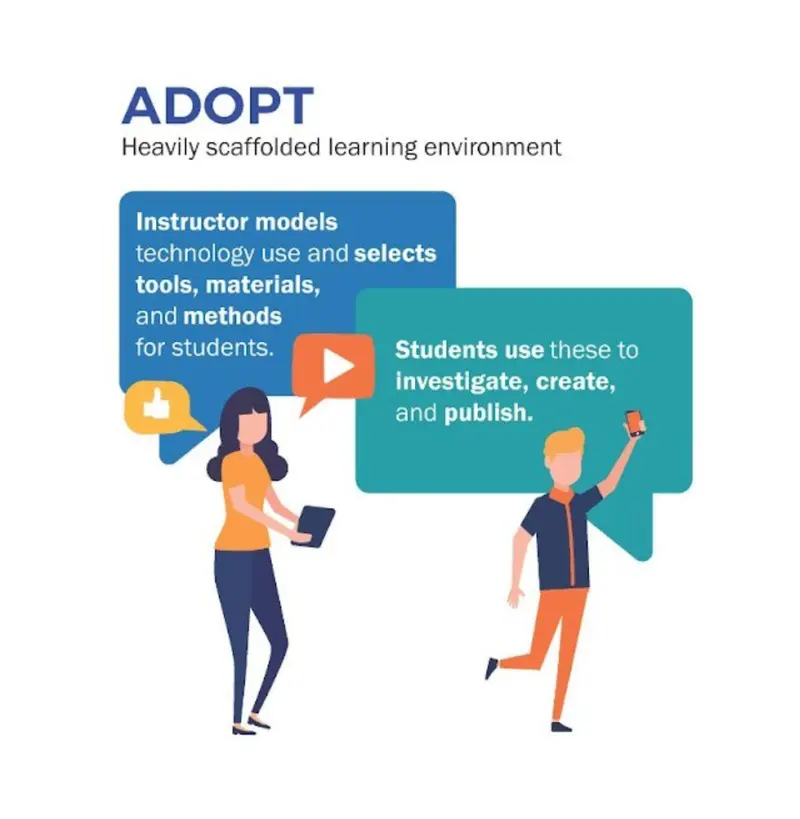
Educators begin using AI tools to enhance instruction and learning by modeling basic procedures and guiding students in accessing, organizing, and understanding information. At this stage, AI supports foundational skills and introduces responsible use within clear instructional boundaries.
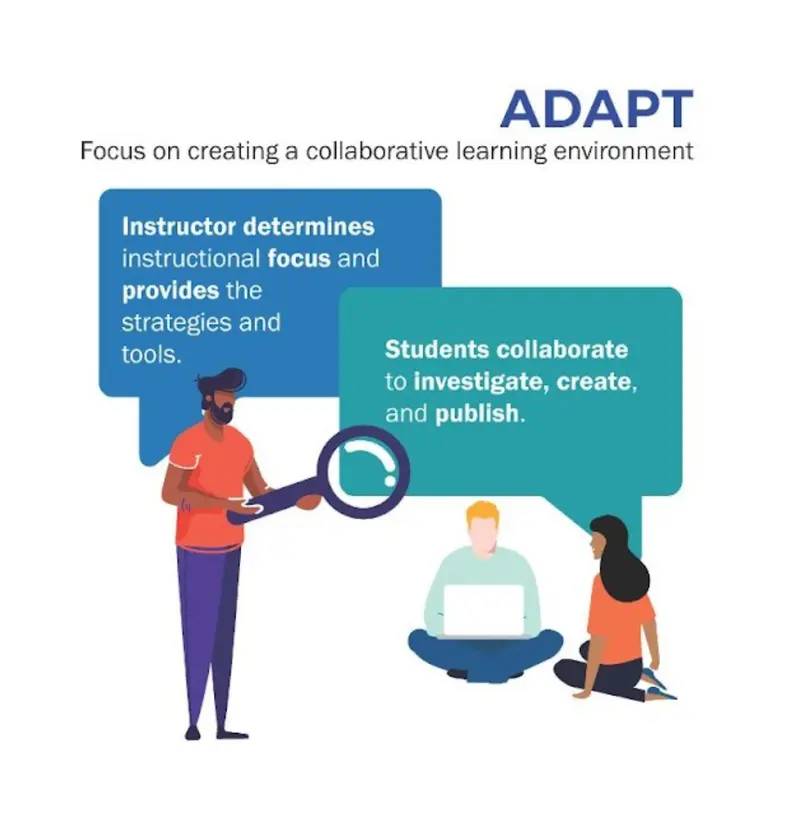
Educators leverage AI to differentiate instruction based on student needs, while students use AI to complete specific tasks independently or collaboratively. AI becomes a flexible tool that supports varied learning pathways while the focus on skill development and understanding is maintained.
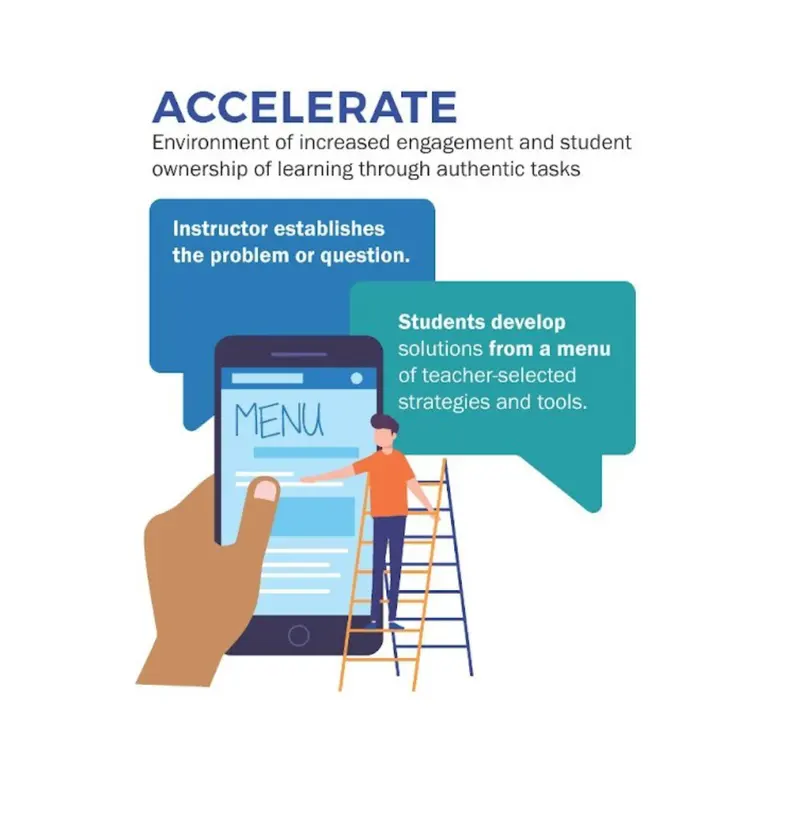
Educators promote increased student ownership by presenting authentic problems for students to solve and allowing learners to select from available AI tools to demonstrate conceptual understanding. AI use at this stage supports higher‑order thinking, inquiry, and meaningful application of learning.
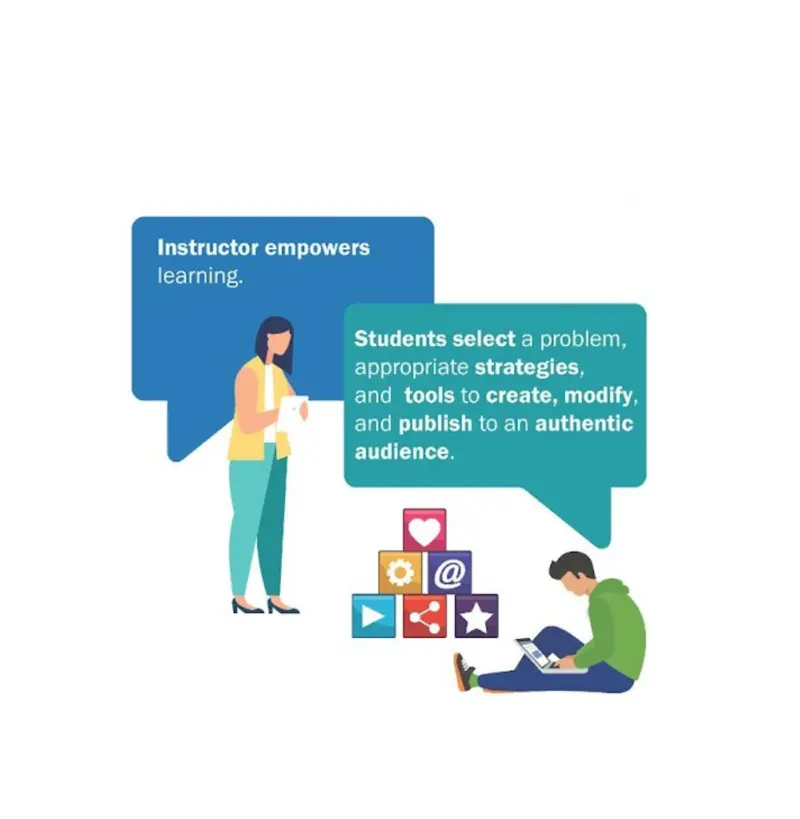
Students use AI tools for real‑world and transformative outcomes, selecting problems to address, determining strategies, and choosing tools to communicate solutions. Learners may explore and implement new AI tools based on their learning needs, demonstrating independence, agency, and responsible use.