Adapt: Collaborative Use and Purposeful Application
In the Adapt stage, educators modify lessons to leverage digital tools in ways that promote collaboration, student-centered learning, and increased ownership. Teachers still provide a clear instructional focus, but students now investigate, create, and publish using digital tools that support inquiry and teamwork.
During this phase, educators determine the problem to solve and identify the tools that students will use. Students apply modeled routines with greater independence, working in small groups or individually to complete tasks. Digital learning becomes more interactive and purposeful, helping students deepen conceptual understanding while strengthening communication and creativity.
This stage reflects a shift toward higher‑order thinking, student ownership, and authentic application of digital tools.
What You’re Seeing
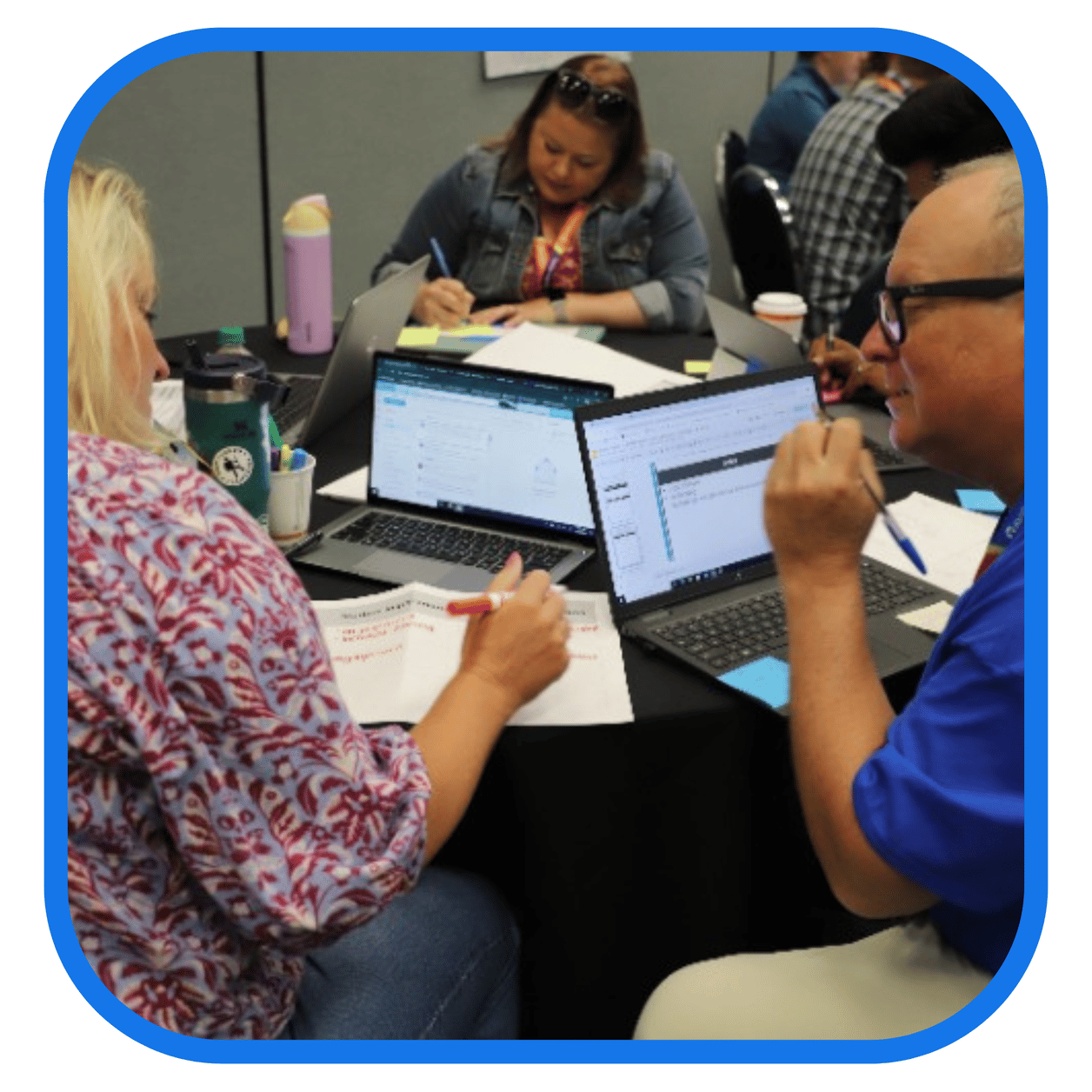
The Adapt phase represents a move from foundational digital literacy toward purposeful collaboration. All roles—students, educators, coaches, and leaders—support the transition to more student-centered, inquiry-driven use of digital tools.

- Work independently and in groups to solve problems using teacher-selected tools.
- Use digital tools to investigate, create, and publish with increasing confidence.
- Follow established digital routines to complete collaborative tasks.
- Strengthen communication, digital citizenship, and teamwork skills through shared workspaces.

- Determine the learning focus and define the problem that students will solve.
- Provide the strategies, tools, and models needed for students to collaborate effectively.
- Scaffold procedures by offering exemplars, visual models, and consistent routines.
- Use digital check-ins or quick assessments to monitor student understanding.

- Co-plan lessons that incorporate structured, collaborative digital tasks.
- Offer just‑in‑time micro professional development to support teachers in shifting to student-centered practices.
- Curate toolsets that align with learning outcomes and collaboration goals.
- Gather evidence of student tool use and collaboration to inform coaching cycles.

- Ensure access to platforms and tools that support collaboration and creation.
- Set expectations that learning comes first and tools serve instructional outcomes.
- Provide time and resources for foundational and ongoing professional learning.
- Promote a culture where digital learning supports conceptual understanding.