PhET Interactive Simulations
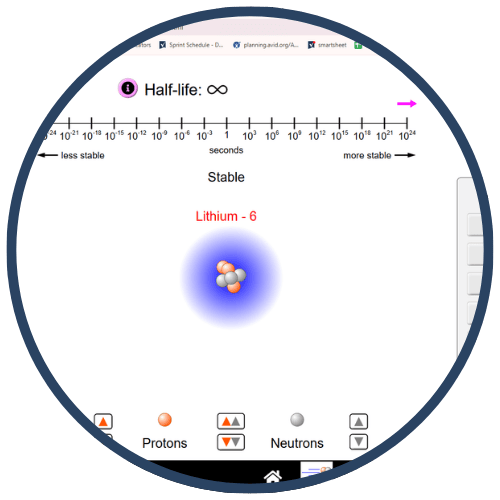
PhET Interactive Simulations, developed by the University of Colorado Boulder, is a free, research‑based collection of interactive science and math simulations. PhET allows students to manipulate variables, test hypotheses, and visualize abstract concepts in physics, chemistry, biology, earth science, and mathematics. The simulations are designed to promote inquiry, conceptual understanding, and sense‑making rather than procedural memorization.
Tech Level

Intermediate
Grade Bands
K-12
Explore the Tool
Getting Started
Go to https://phet.colorado.edu/.
Hover over Simulations to browse by subject or grade band.
Select a simulation and choose HTML5 for device compatibility.
Pair simulations with guiding questions, prediction prompts, or lab tasks.
Key Classroom Features
Interactive Variable Manipulation: Students change inputs and observe immediate effects.
Multiple Science & Math Domains: Physics, chemistry, biology, earth science, and mathematics.
Teacher Resources: Lesson ideas, activity guides, and facilitation strategies.
Device Friendly: Works on Chromebooks, tablets, PCs, and Macs.
Offline Options: Many simulations are available for download for offline use.
AVID Strategy Connections
✏️ Writing
Claim‑Evidence‑Reasoning (CER): Students write explanations supported by evidence observed in simulations.
Lab Reflections: Learners describe how changes in variables affected outcomes.
💡 Inquiry
Hypothesis Testing: Students make predictions, test variables, and revise their thinking.
What‑If Questions: Learners explore alternate conditions and outcomes.
💬 Collaboration
Partner Investigations: Students explore simulations together and compare findings.
Academic Discourse: Groups discuss why different results occurred under different conditions.
🗂️ Organization
Data Tables & Observations: Students organize findings in charts or graphic organizers.
Structured Inquiry Tasks: Teachers scaffold investigations with checkpoints and prompts.
📖 Reading
Reading Visual Models: Students interpret graphs, diagrams, and simulation outputs.
Scientific Vocabulary in Context: Terms are learned through direct interaction and observation.
Accessibility Spotlight
PhET supports inclusive learning by providing highly visual, interactive representations of abstract concepts, reducing reliance on text‑heavy explanations. Simulations include accessibility features and are translated into 90+ languages, supporting multilingual learners. Because students can manipulate variables at their own pace and receive immediate feedback, PhET is especially effective for learners who benefit from hands‑on exploration, repetition, and visual modeling.